Midcentury Modern: History, Design Elements, and Iconic Examples Explained
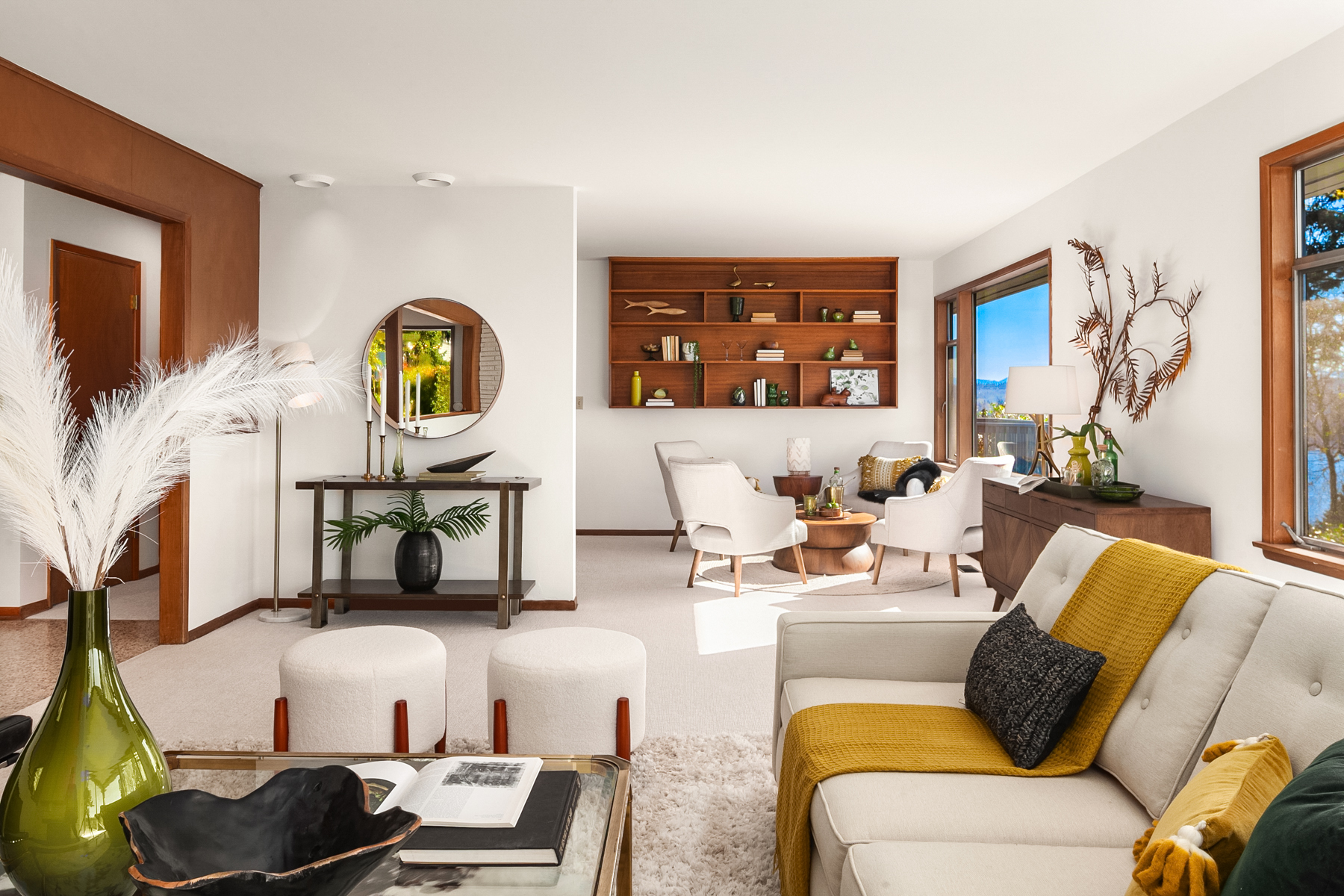
Midcentury modern is one of the most recognizable and influential design movements of the 20th century, spanning from the mid-1940s through the late 1960s. Characterized by clean lines, minimal ornamentation, and a seamless integration with nature, midcentury modern design continues to influence contemporary architecture, furniture, and interiors.
The movement emerged in the post-World War II era, when rapid technological advancements and a desire for simplicity drove architects and designers to experiment with new materials and construction methods. Today, midcentury modern is celebrated for its timeless aesthetic and functionality, making it a staple in both homes and commercial spaces.
The Origins and Evolution of Midcentury Modern Design
Midcentury modern design was deeply influenced by the Bauhaus movement and Scandinavian design principles, both of which emphasized functionality, simplicity, and harmony between form and purpose. After the war, the need for affordable housing and efficient production methods also shaped the movement, as mass-manufactured furniture and modular construction became increasingly popular.
The period from the 1940s to the 1960s saw midcentury modern evolve through architecture, furniture design, and urban planning. Designers like Charles and Ray Eames, George Nelson, and Eero Saarinen pushed the boundaries of design, creating pieces that were not only beautiful but also highly practical. Their innovations remain icons of modern living to this day.
Defining Characteristics of Midcentury Modern
Clean Lines and Geometric Shapes
One of the hallmarks of midcentury modern is its emphasis on clean, simple lines. Furniture and buildings often feature streamlined profiles, geometric forms, and little to no unnecessary ornamentation.
Organic and Natural Influences
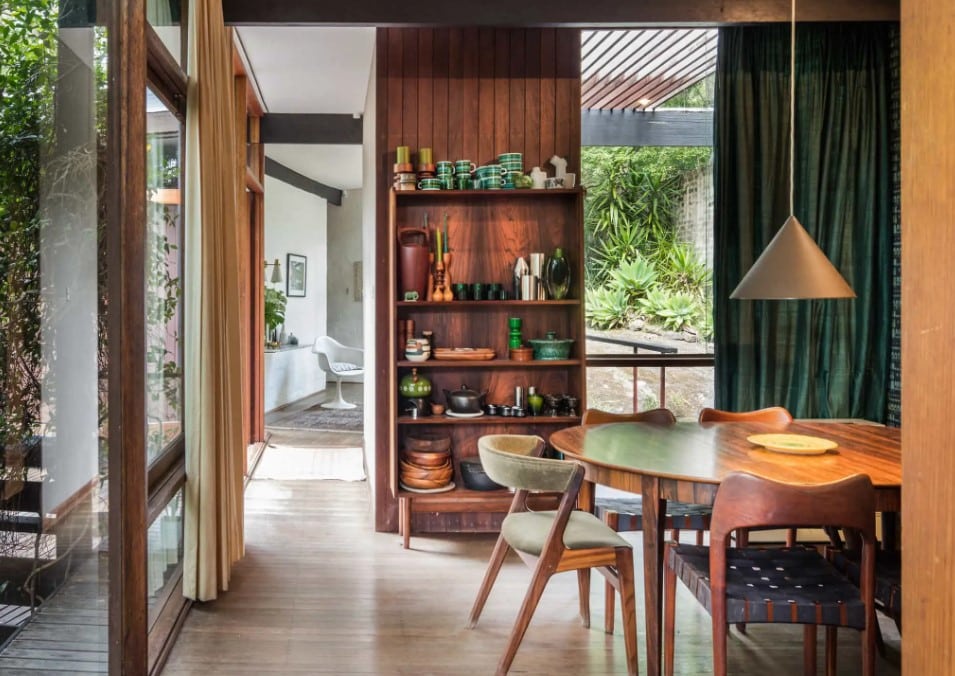
Although midcentury modern embraces geometry, it also integrates organic shapes and natural elements. Curved furniture silhouettes, large windows, and the use of wood help connect interior spaces to the outdoors.
Functional Beauty
Every design element in midcentury modern serves a purpose. From built-in storage solutions to modular furniture, the focus is on usability while maintaining elegance.
New Materials and Innovation
The midcentury era saw widespread use of new materials like molded plywood, fiberglass, and aluminum. These materials enabled designers to create shapes and products that were previously impossible with traditional wood and stone.
Real-World Examples of Midcentury Modern Design
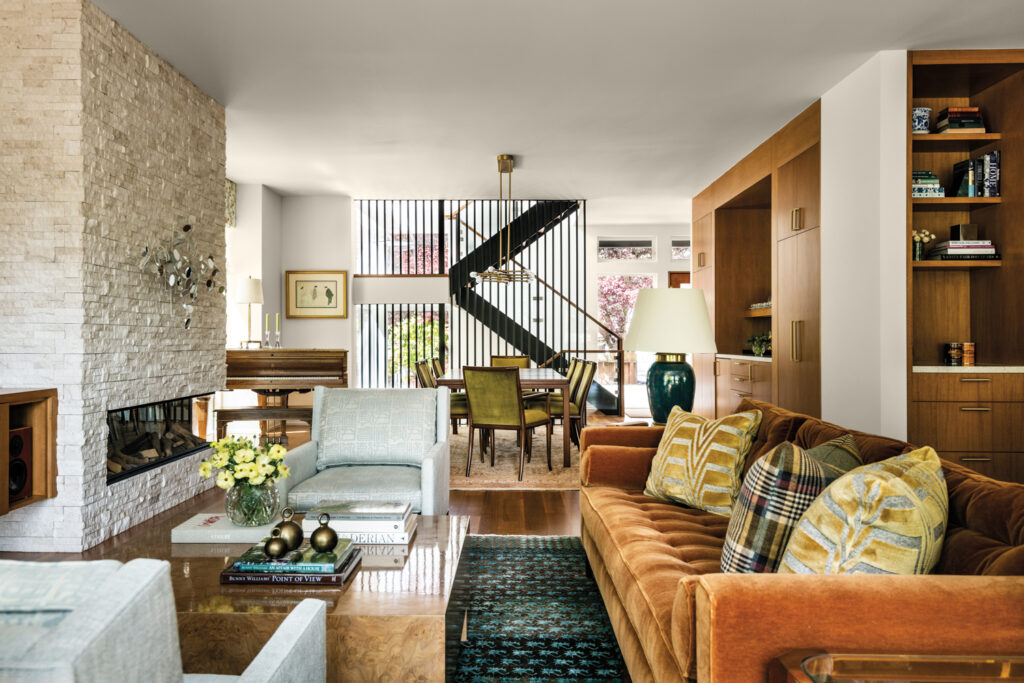
Example 1: The Eames Lounge Chair
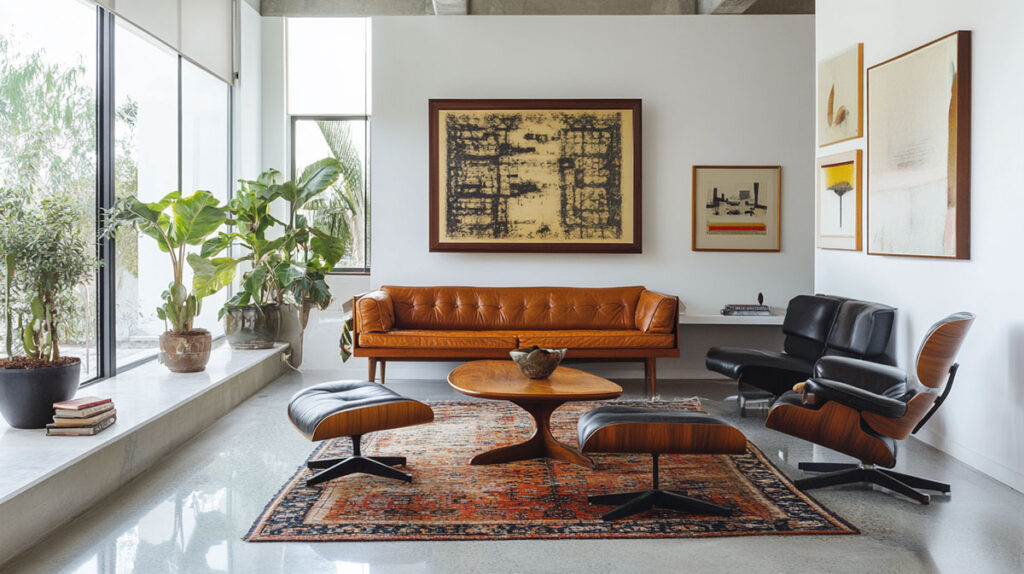
The Eames Lounge Chair and Ottoman, designed by Charles and Ray Eames in 1956, is one of the most iconic pieces of midcentury modern furniture. It combines luxurious leather upholstery with molded plywood, representing both comfort and innovation.
Its timeless appeal comes from the way it balances elegance with practicality. The chair was designed for relaxation, yet it remains a sculptural piece that elevates any space. Even decades later, it symbolizes the midcentury ethos of combining form and function seamlessly.
Example 2: Fallingwater by Frank Lloyd Wright
Although Frank Lloyd Wright’s work predates the official midcentury modern era, his masterpiece Fallingwater embodies many of the movement’s defining principles. Built in 1935, the home integrates directly with its natural surroundings, with cantilevered balconies extending over a waterfall.
This architectural marvel influenced countless midcentury architects who sought to blur the line between indoors and outdoors. Fallingwater represents the harmonious relationship between design, functionality, and the natural world — a central theme of midcentury modern philosophy.
Example 3: The Tulip Table by Eero Saarinen
Eero Saarinen’s Tulip Table, introduced in the 1950s, remains one of the most recognized midcentury modern designs. Its single pedestal base solved the common problem of “legs clutter” found in traditional tables, combining innovation with elegance.
The Tulip Table highlights the midcentury focus on simplicity and functionality while offering a futuristic form that still feels relevant today. Its ability to complement diverse interior styles demonstrates the lasting versatility of midcentury modern design.
Example 4: Case Study Houses Program
The Case Study Houses program, launched in California during the 1940s and 1950s, was a series of experimental modern homes designed by leading architects like Richard Neutra, Pierre Koenig, and Charles Eames. These houses aimed to address the postwar housing boom with affordable, efficient, and innovative designs.
They featured open floor plans, expansive glass walls, and integration with the landscape — principles that have come to define midcentury modern architecture. The Case Study Houses remain a cornerstone in understanding how midcentury ideas were applied to everyday living.
Example 5: George Nelson’s Ball Clock
George Nelson’s Ball Clock, designed in 1949, is a playful yet functional piece that epitomizes midcentury modern aesthetics. With its bold geometric form and vibrant colors, it represents the era’s embrace of experimentation while maintaining practicality.
The Ball Clock’s lasting popularity showcases how midcentury modern design wasn’t just about buildings and furniture but also about smaller household objects that brought modernist principles into everyday life.
Benefits of Midcentury Modern Design
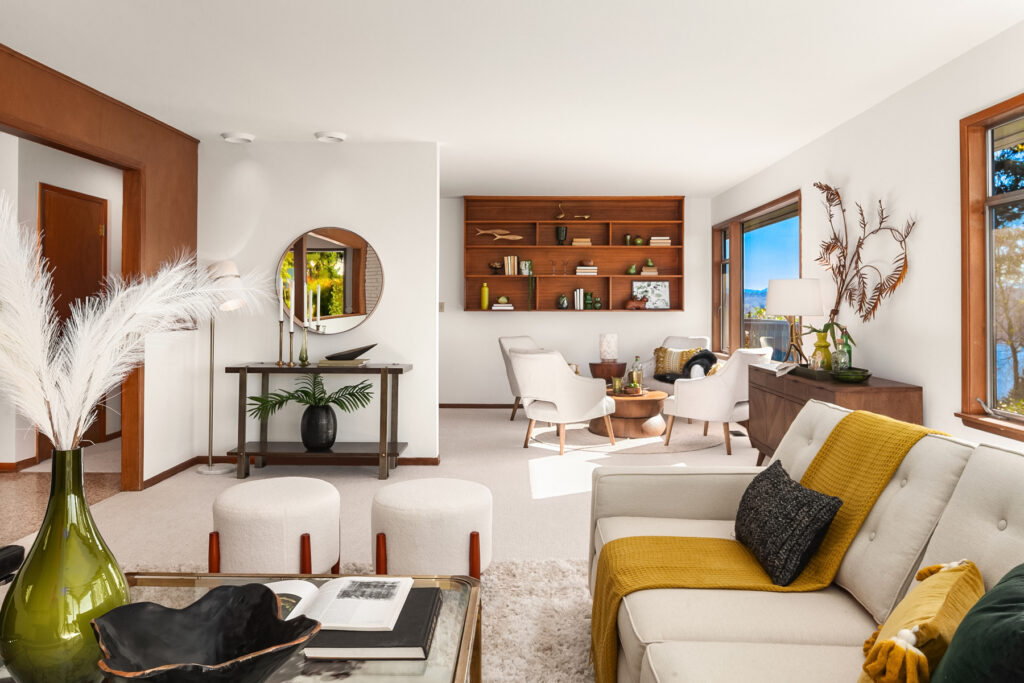
Timeless Appeal
Midcentury modern design has remained relevant for decades due to its simplicity and elegance. Its clean lines and functional beauty allow it to adapt to changing tastes and interior trends.
Integration with Nature
The emphasis on large windows, open spaces, and natural materials promotes harmony with the environment. This connection to nature is not only aesthetically pleasing but also beneficial for well-being.
Functionality and Comfort
Midcentury modern pieces are not only stylish but also practical. Furniture is designed for everyday use, making it comfortable without sacrificing visual appeal.
Versatility in Application
Whether in architecture, furniture, or home décor, midcentury modern can be incorporated into a variety of settings. Its neutral tones and simple forms make it compatible with both minimalist and eclectic interiors.
Practical Use Cases of Midcentury Modern
Use Case 1: Residential Interiors
Homeowners often turn to midcentury modern furniture and layouts to create warm, inviting living spaces. The use of wood, natural light, and functional layouts provides comfort while maintaining sophistication.
Use Case 2: Office Design
Midcentury modern principles are also widely applied in office spaces. Clean lines, ergonomic furniture, and open layouts foster productivity and creativity while ensuring visual appeal.
Use Case 3: Hospitality Industry
Hotels, restaurants, and lounges frequently incorporate midcentury modern elements to evoke a sense of timeless style. The combination of comfort and elegance creates welcoming environments for guests.
Use Case 4: Renovation Projects
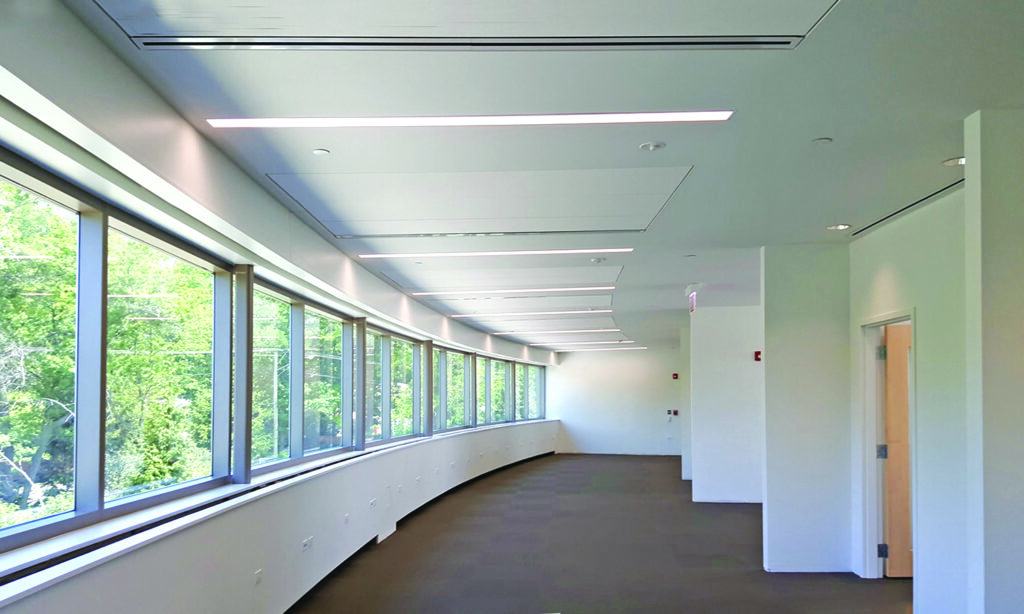
Many homeowners renovating older homes draw inspiration from midcentury modern aesthetics. Its adaptability allows designers to update spaces while retaining a classic, timeless charm.
Frequently Asked Questions
1. What makes midcentury modern different from other design styles?
Midcentury modern emphasizes simplicity, functionality, and integration with nature. Unlike ornate or highly decorative styles, it focuses on clean lines, geometric shapes, and purposeful design.
2. Is midcentury modern still popular today?
Yes, midcentury modern remains one of the most enduring design movements. Its timeless appeal, functional beauty, and versatility ensure its continued relevance in both residential and commercial design.
3. Can midcentury modern be mixed with other design styles?
Absolutely. Midcentury modern’s neutral colors and simple forms make it adaptable to various design styles, including contemporary, minimalist, and even eclectic interiors.