Gaudí: The Visionary Architect and His Lasting Legacy in Modern Architecture
Antoni Gaudí is one of the most celebrated architects in history, renowned for his imaginative and unconventional approach to design. A central figure in Catalan Modernism, Gaudí transformed the architectural landscape of Barcelona with works that combined natural inspiration, intricate detailing, and groundbreaking structural techniques.
His style was unlike any other architect of his time. Gaudí’s buildings appear almost organic, as if grown rather than constructed. By fusing art, religion, and nature into his designs, Gaudí created timeless masterpieces that continue to attract millions of visitors every year.
The Life and Career of Antoni Gaudí
Born in 1852 in Reus, Catalonia, Antoni Gaudí displayed an early interest in geometry and nature. After studying architecture in Barcelona, he quickly gained recognition for his bold and unconventional designs. His career spanned the late 19th and early 20th centuries, with his most prolific period being between 1883 and 1926.
Gaudí’s strong Catholic faith deeply influenced his work, with religious symbolism appearing throughout his architecture. His career tragically ended in 1926 when he died after being struck by a tram in Barcelona. However, his vision and legacy continue to shape the architectural world today.
Gaudí’s Unique Architectural Style
Gaudí’s work is often described as a fusion of Gothic revival, Art Nouveau, and his own distinctive interpretation of modernist design. What made him unique was his ability to incorporate organic shapes, asymmetry, and vibrant colors into his creations.
Instead of relying on rigid lines and symmetry, Gaudí embraced curves, spirals, and irregular forms that mirrored the natural world. He was also a pioneer in using innovative construction methods, experimenting with new materials, and applying advanced mathematical concepts such as parabolic arches and hyperboloid structures.
Real-World Examples of Gaudimasterpieces
Example 1: Sagrada Família
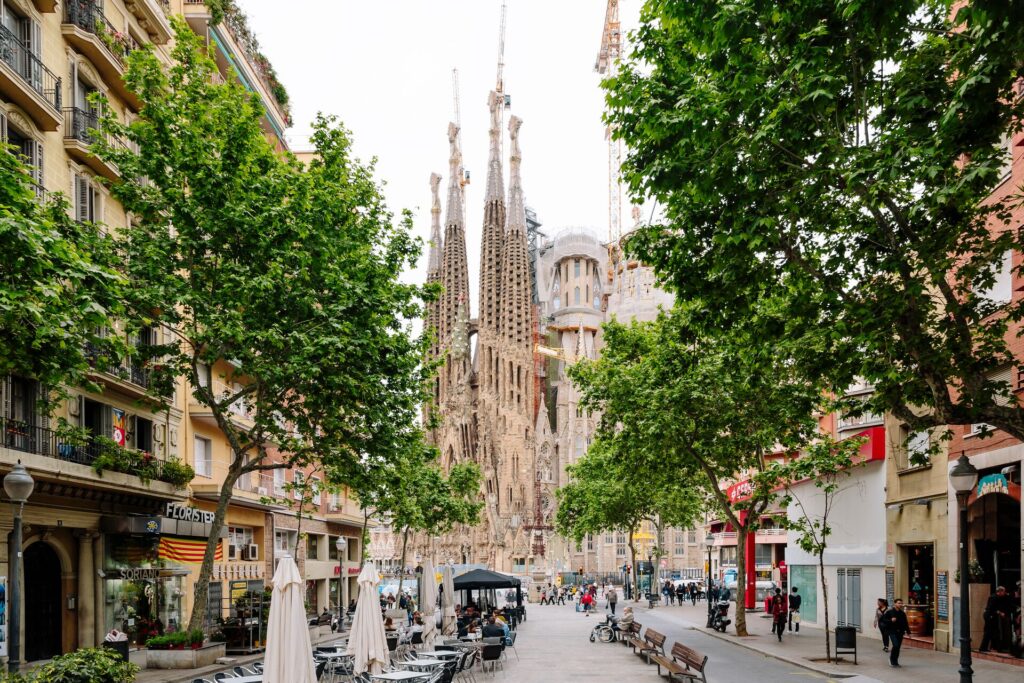
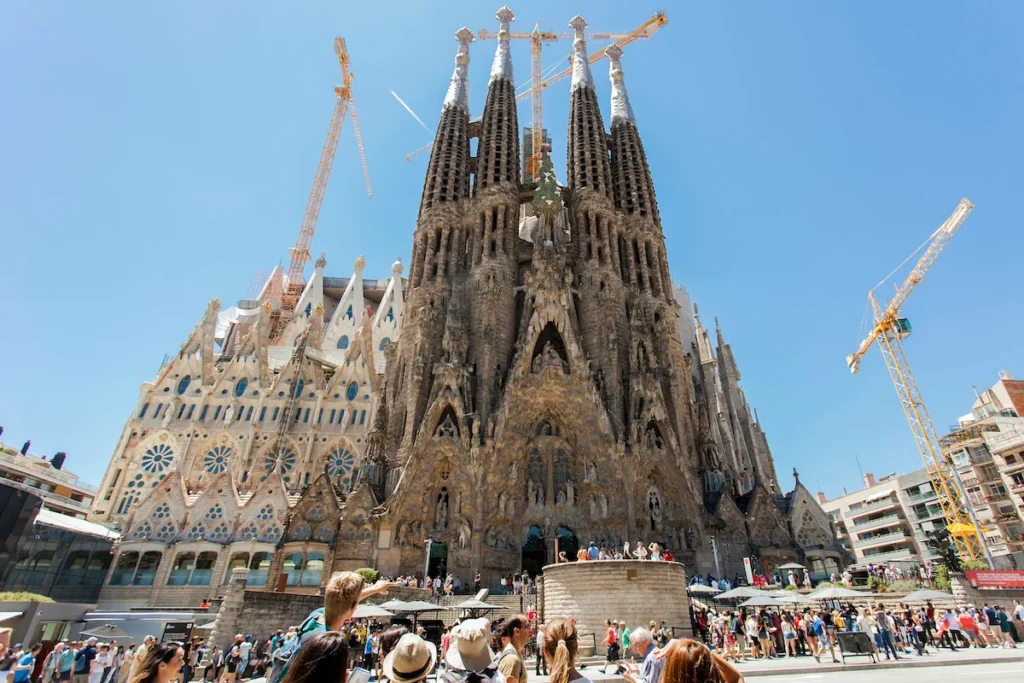
Perhaps Gaudí’s most famous and ambitious project, the Basílica de la Sagrada Família, remains unfinished nearly a century after his death. Construction began in 1882, and Gaudí dedicated the last 15 years of his life almost exclusively to this project.
The basilica reflects a unique blend of Gothic and Art Nouveau styles. Its towering spires, intricate facades, and symbolic sculptures convey deep religious meanings. The interior is equally breathtaking, designed to resemble a forest with columns branching like trees, creating a spiritual and immersive atmosphere.
The Sagrada Família is not only a religious site but also a symbol of Barcelona’s identity and a UNESCO World Heritage Site. Its ongoing construction represents the continuation of Gaudí’s vision through modern technology and architectural innovation.
Example 2: Park Güell
Originally conceived as a residential garden city, Park Güell evolved into one of Barcelona’s most iconic public spaces. Commissioned by industrialist Eusebi Güell, the park showcases Gaudí’s playful use of color, mosaics, and organic forms.
The serpentine bench, vibrant ceramic tiles, and whimsical structures like the Dragon Stairway embody Gaudí’s ability to merge nature with artistry. Park Güell is a celebration of Catalan culture and creativity, blending architectural ingenuity with environmental harmony. Today, it serves as a cultural landmark and a testament to Gaudí’s visionary approach.
Example 3: Casa Batlló
Located in the heart of Barcelona, Casa Batlló is one of Gaudí’s most recognizable residential buildings. Designed in 1904, it is renowned for its flowing façade, which resembles the surface of a calm sea. The building incorporates marine-inspired motifs, such as wave-like balconies and a roof that evokes the back of a dragon.
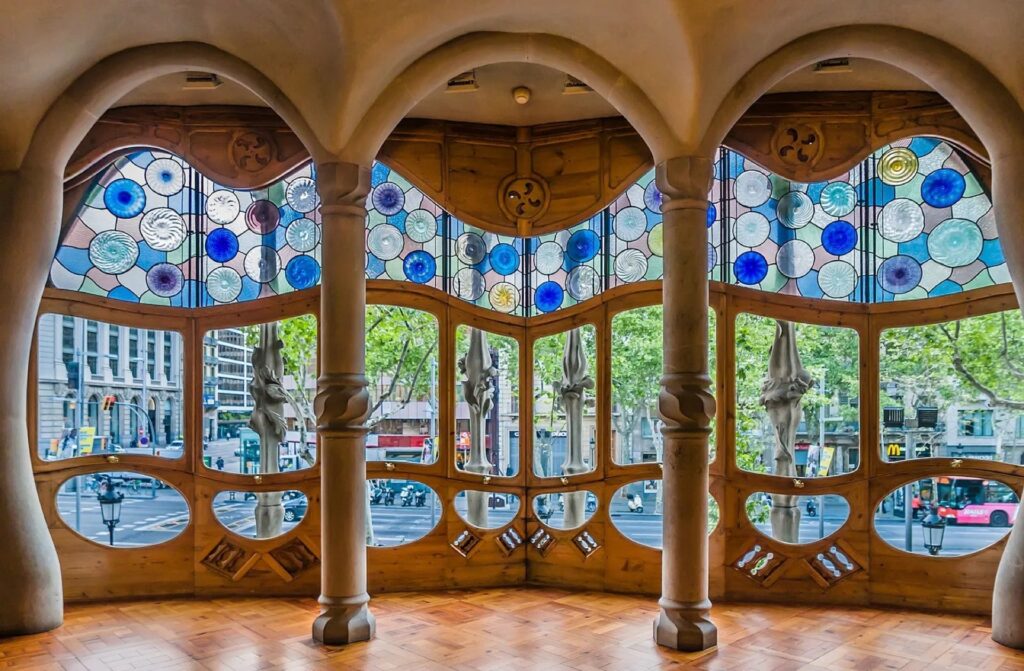
Inside, Gaudí’s attention to detail is evident in every element, from the wooden staircases to the colorful stained glass windows. The house exemplifies his philosophy that architecture should be functional, beautiful, and inspired by nature. Casa Batlló remains a prime example of how Gaudí transformed ordinary spaces into extraordinary works of art.
Example 4: Casa Milà (La Pedrera)
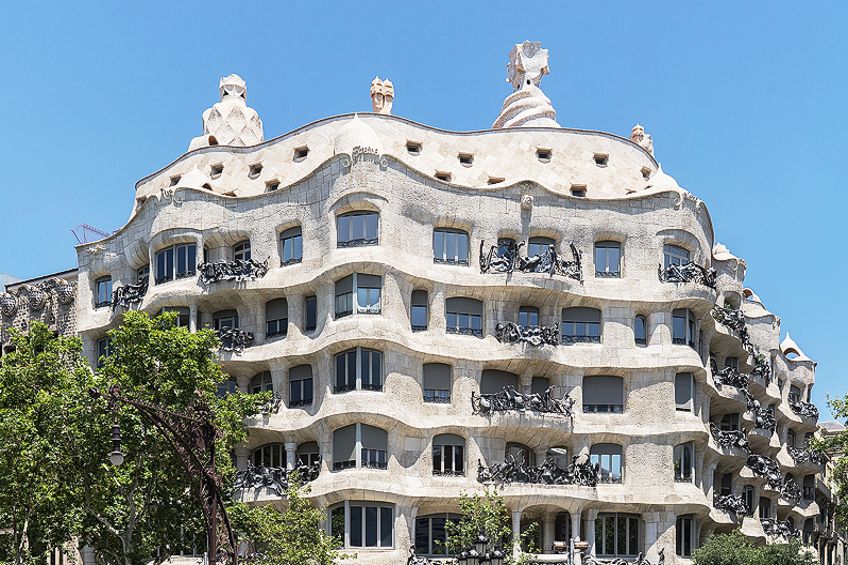
Completed in 1912, Casa Milà, also known as La Pedrera, was a groundbreaking residential building that challenged conventional architectural norms. Its undulating stone façade, wrought-iron balconies, and rooftop chimneys resemble sculptures rather than traditional architectural features.
Gaudí designed Casa Milà with a focus on natural light and ventilation, introducing innovative concepts that were far ahead of his time. The rooftop terrace, with its surreal chimney designs, remains one of the most photographed features in Barcelona. Casa Milà demonstrates Gaudí’s ability to blend practicality with artistic expression.
Example 5: Colònia Güell Crypt
The Colònia Güell Crypt, located outside Barcelona, is one of Gaudí’s lesser-known masterpieces but a vital example of his experimental architecture. Built as part of a workers’ village, the crypt demonstrates Gaudí’s use of parabolic arches, inclined columns, and irregular geometries.
Although the full church was never completed, the crypt became a testing ground for techniques later applied to the Sagrada Família. The structure exemplifies Gaudí’s belief in integrating architecture with spiritual and social purpose.
Benefits of Gaudí’s Influence on Architecture
Gaudí’s work provides lasting lessons for both architects and urban planners. His approach to design highlights the importance of innovation, sustainability, and cultural expression in architecture.
Innovation and Creativity
Gaudí broke away from conventional architectural norms, proving that creativity can redefine how we perceive buildings and spaces. His legacy encourages architects to think beyond functionality and embrace design as an art form.
Integration with Nature
Gaudí’s designs reflect the harmony between human structures and the natural environment. His organic shapes and sustainable design concepts remain relevant today, as modern architects strive for environmentally conscious solutions.
Lasting Cultural Impact
Gaudí’s works are not only architectural achievements but also cultural treasures. They attract millions of visitors annually, contributing to Barcelona’s economy and reinforcing the city’s identity as a hub of creativity.
Practical Use Cases of Gaudí’s Legacy
Inspiring Modern Architects
Modern architects often draw inspiration from Gaudí’s use of organic forms and innovative materials. His works continue to influence contemporary architectural movements worldwide.
Promoting Sustainable Design
Gaudí’s natural ventilation techniques, use of recycled materials, and harmony with nature provide valuable insights for sustainable architecture in today’s climate-conscious world.
Enhancing Urban Identity
Cities can learn from Gaudí’s approach by integrating unique and culturally significant designs into urban planning. His works show how architecture can shape and strengthen a city’s identity.
Driving Tourism and Economic Growth
Gaudí’s creations, particularly in Barcelona, demonstrate how architecture can become a powerful driver of tourism, cultural pride, and local economic development.
Frequently Asked Questions
1. Why is Gaudí considered unique in architecture?
Gaudí is considered unique because he broke away from traditional architectural norms, incorporating organic shapes, religious symbolism, and innovative engineering techniques. His works blend art, nature, and spirituality in ways that remain unmatched.
2. Which of Gaudí’s works is the most famous?
The Sagrada Família is Gaudí’s most famous and ambitious project. It is still under construction today and has become a global symbol of Barcelona as well as a UNESCO World Heritage Site.
3. How does Gaudí’s work influence architecture today?
Gaudí’s emphasis on creativity, sustainability, and integration with nature continues to inspire architects worldwide. His visionary techniques inform modern architectural practices in both design and urban development.